
Last updated November 15, 2026
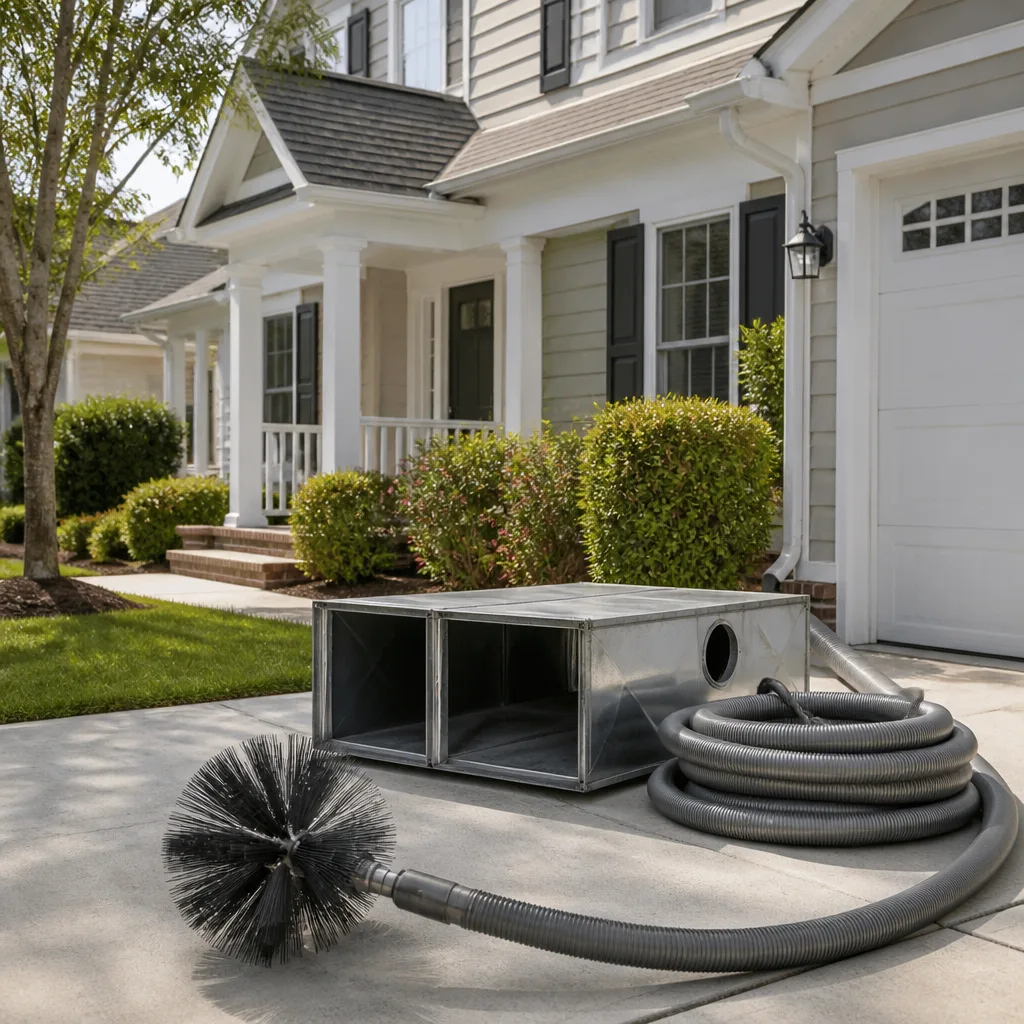 Whole-home duct cleaning
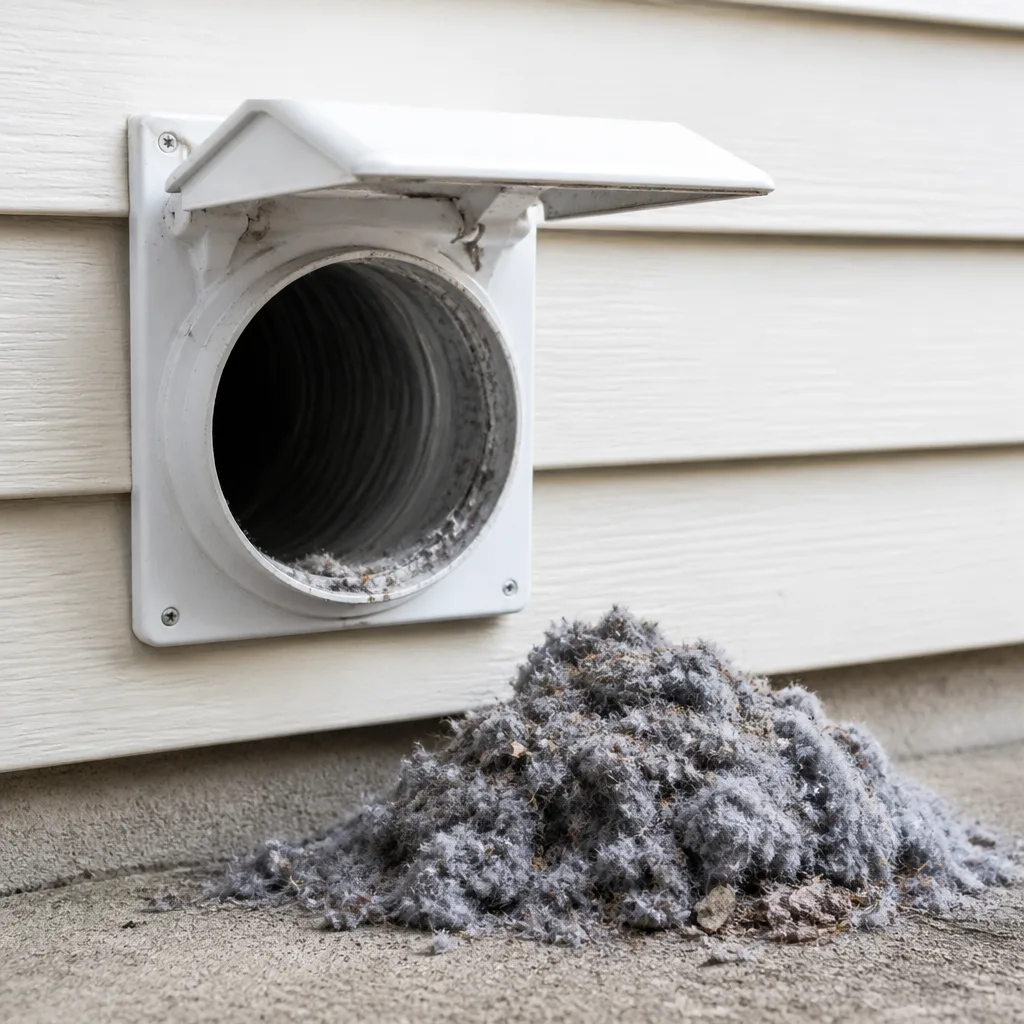 Dryer vent cleaning
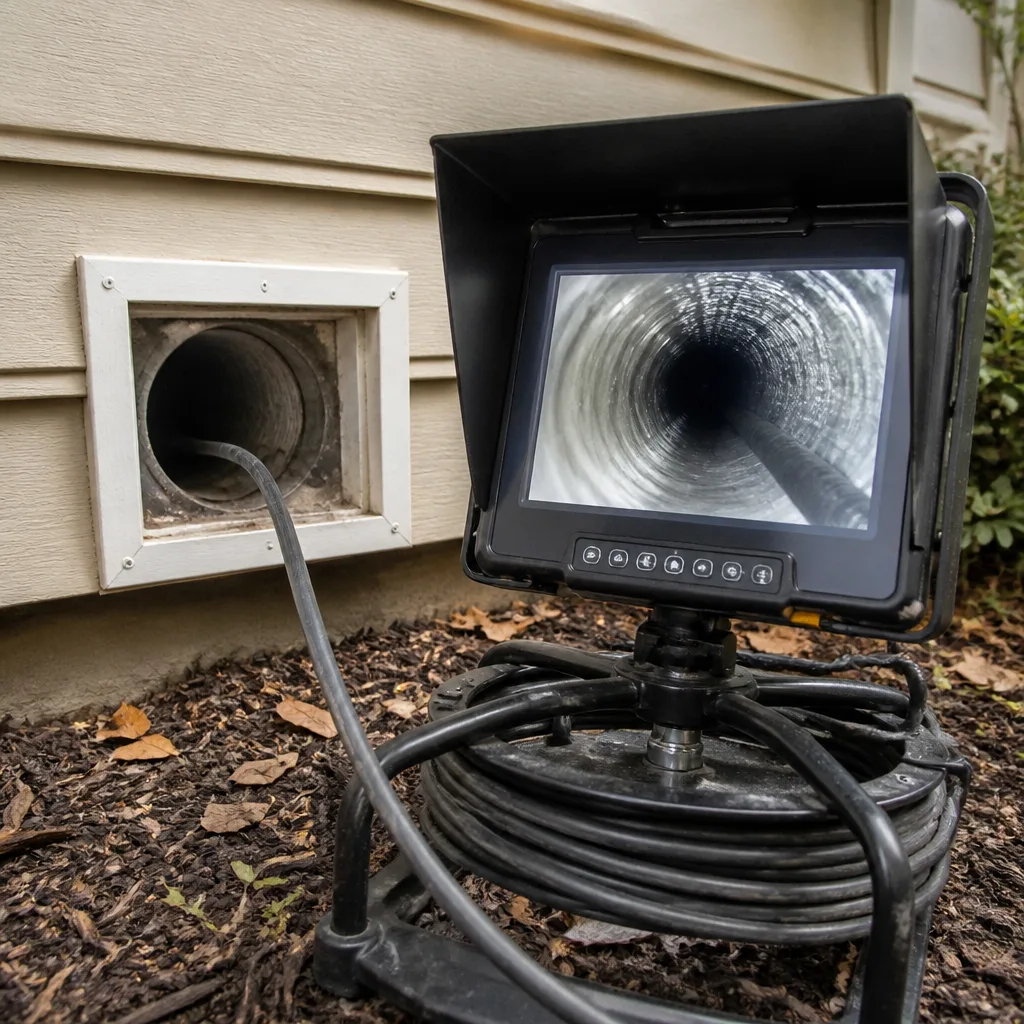 Camera inspection
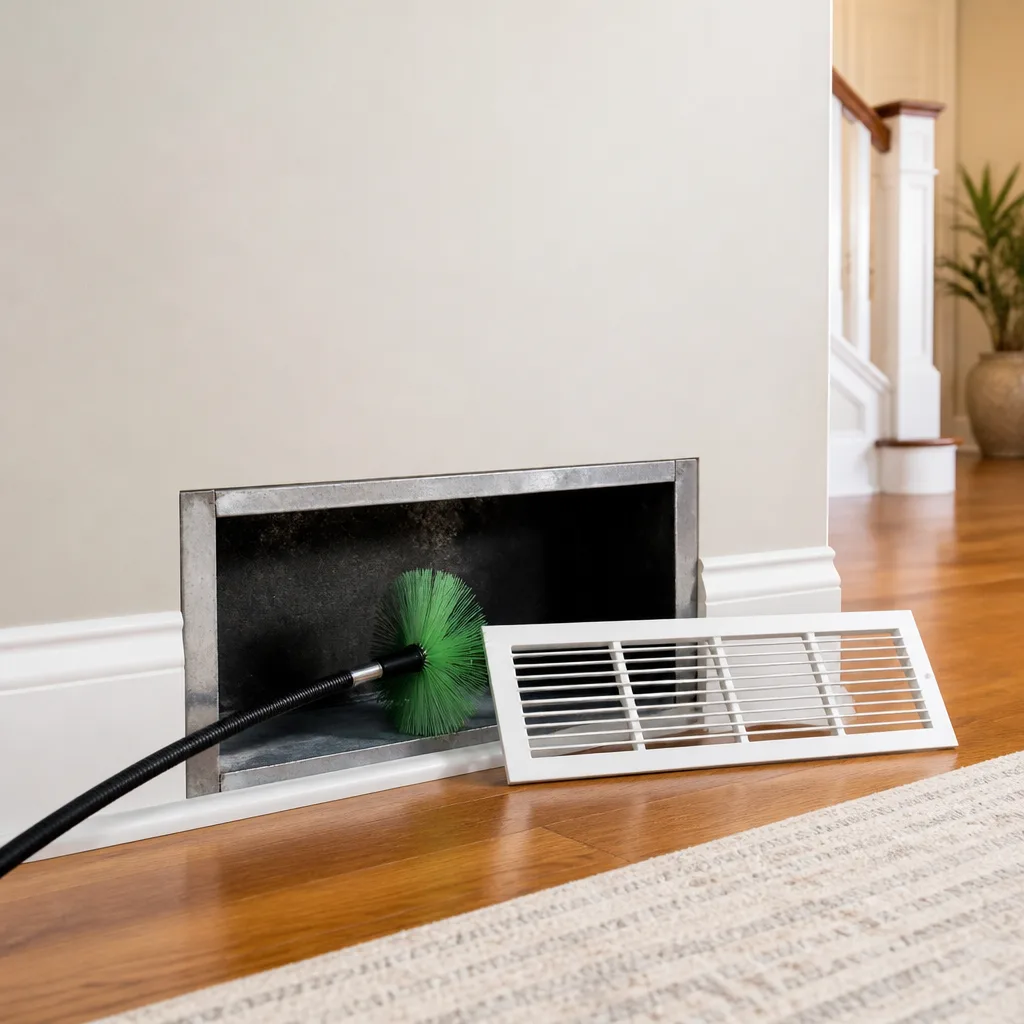 Sanitizing & deodorizing
Whole-system duct and dryer vent check with before-and-after photos - you see exactly what came out of your vents
That "$99 whole-house special" is a bait ad - the real number appears once they are in your hallway, or the "clean" is a shop-vac at the register. We photograph the inside of your ducts before and after instead.
Seasonal Air Duct Cleaning Care for McKinney: Year-Round Homeowner’s Guide
Most homeowners treat air duct cleaning as a once-a-decade chore, something to schedule when the vents look dusty or a neighbor mentions it. That schedule was written for a national average. It doesn’t fit McKinney. Here, your HVAC system runs air conditioning for roughly 150+ days a year, then flips into a heating season that pushes a different kind of load through the same ductwork. Two hard demand cycles, back to back, with short shoulders in between. Debris accumulates faster here than it would in a cooler climate on the same maintenance plan. This guide maps duct care to McKinney’s actual seasonal transitions: what to check in April before cooling season locks in, what heavy summer runtime does to return ducts, why the first heat cycle in October matters, and how Collin County’s pollen and new construction affect the air moving through your home.
Quick Answer
For McKinney homeowners, the two most valuable duct maintenance windows are April (before cooling season runs continuously) and October (before the first heat cycle burns off accumulated summer dust). Heavy AC runtime from May through October pulls debris into return ducts faster than a mild climate would, so an annual inspection at those transition points catches problems while they’re still cheap and small. A full cleaning every few years, plus filter discipline in between, keeps the system moving air the way it was designed to.
Styles & brands we work with
- Whole-home duct cleaning
- Dryer vent cleaning
- Camera inspection
- Sanitizing & deodorizing
Table of Contents
- Why McKinney’s Climate Changes the Duct Care Calendar
- April: The Pre-Cooling Season Inspection Window
- Mid-Summer: Reading the Signs of Heavy AC Runtime
- Collin County Pollen Season and Filter Timing
- October: The Pre-Heating Transition and the First Heat Cycle
- New Construction in McKinney’s Northern Corridors
- Winter: Low-Runtime Months and What to Watch
- What Professional-Grade Duct Cleaning Actually Involves
Why McKinney’s Climate Changes the Duct Care Calendar
Air duct cleaning schedules you read online usually assume a four-season climate with a long, mild spring and fall. McKinney doesn’t work that way. Cooling season here is long and intense, and heating season, while shorter, still runs the system hard from November through February. That gives you two peak-demand periods with narrow transition windows between them, and those transitions are where problems are easiest to catch.
The physics are straightforward. Every hour your system runs, it moves air through the same ducts, and that air carries dust, pollen, pet dander and whatever else is suspended in your home. Some of it settles on duct walls. In a climate where the AC runs for more than 150 days a year, that settling happens faster than it would in a place where the system idles for months. The debris layer thickens, airflow drops, and the blower works harder to push the same volume of air.
What makes McKinney different from a generic “clean your ducts every 3 to 5 years” recommendation is the compression of the timeline. You don’t get a long, low-demand stretch where the system rests. You get a short shoulder in spring, a short shoulder in fall, and two intense seasons in between. Those shoulders are your maintenance windows.
We’ve seen this pattern play out across McKinney neighborhoods, from older established streets near the historic downtown to the newer developments pushing north. The houses differ, but the seasonal rhythm is the same. What changes is how much debris the system is exposed to and how well the ductwork was sealed to begin with.
If you’re new to the area or you’ve just moved into a home whose duct history you don’t know, start with a baseline assessment. Our duct cleaning McKinney service exists for exactly that: a documented look at what’s in the system before you commit to a schedule.
April: The Pre-Cooling Season Inspection Window
April is the most important month on the McKinney duct calendar, and it’s the one most homeowners skip. Cooling season is about to start. Once the AC runs continuously from May through October, any debris sitting in the ducts gets pulled into the airstream and distributed through the house day after day. Catching it in April means you’re starting the heavy season with a clean system instead of a loaded one.
Here’s what to check before the system switches into continuous cooling:
- Return air grilles. Pull the grille and look at the duct behind it. A visible dust mat or a dark film on the galvanized metal means debris is already accumulating and April is the right time to address it.
- Supply register airflow. Hold a tissue or a light piece of paper against each supply register with the fan running. Weak or uneven airflow at some vents points to a restriction or a disconnected run, not just dirt.
- Filter fit and condition. Check that the filter is the right size for the slot, seated fully, and not collapsing. A filter that’s bypassing air around its edges is doing almost nothing.
- Visible duct connections. In the attic or crawl space, look for separated joints, crushed flex runs, or tape that has let go. A leaking duct in April becomes a bigger airflow problem by July.
- Odor on startup. When you first run the AC in spring, notice the smell. A musty or stale odor that lingers past the first few minutes is worth investigating.
This is also the right window to book a cleaning if it’s been several years or if you’ve never had one in your current home. Getting the work done in April means the cooling season starts clean. If an inspection turns up damaged ductwork, that’s fixable in the same visit through our Air Duct Repair service, so you’re not left chasing a second contractor.
One safety note: duct inspection in an attic involves heat, tight spaces and sometimes electrical components. If you’re not comfortable up there, or if you see anything that looks like damaged wiring, leave it to a trained professional rather than poking at it yourself.
Mid-Summer: Reading the Signs of Heavy AC Runtime
By mid-summer, your system has been running hard for weeks. This is when the consequences of a loaded duct system start showing up as symptoms a homeowner can actually notice. The trick is knowing which symptoms point to duct debris and which point to something else, like a refrigerant issue or a failing blower.
Signs that heavy AC runtime is pulling debris into your return ducts faster than expected:
- Dust settling faster than usual. If you’re dusting surfaces more often than you did a few months ago, the system may be redistributing debris that’s accumulated on the duct walls.
- Weak airflow at far registers. Vents at the end of the longest runs are the first to lose airflow when the ducts are restricted. If the bedrooms at the back of the house feel warmer than the rest, note it.
- A musty smell when the AC kicks on. That smell on startup often traces to moisture and debris in the duct system, not the air handler alone.
- Higher energy bills at the same thermostat setting. A restricted system makes the blower and compressor work harder to deliver the same comfort.
- Visible dust around the return grille. A ring of dust around the frame suggests debris is being pulled past a poorly sealed grille.
None of these symptoms on their own proves the ducts need cleaning. Together, though, they’re a strong signal that the system is working against a restriction. Mid-summer is not the ideal time to schedule a full cleaning (April and October are better windows), but it is the right time to call for an assessment so you know what you’re dealing with before the fall transition.
Our technicians have up to 13 years of experience reading exactly these signals, and they can tell the difference between a duct problem and an equipment problem. That matters, because cleaning ducts won’t fix a refrigerant leak, and replacing a blower won’t fix a crushed flex run.
Collin County Pollen Season and Filter Timing
Collin County has a pronounced pollen season, driven primarily by cedar in the winter and oak in the spring. Cedar pollen in this part of Texas is a well-known irritant, and oak produces heavy pollen loads in spring. For a homeowner with a duct system, that means the filter is doing more work than a national filter-replacement schedule would suggest.
Generic advice says replace a 1-inch filter every 30 to 90 days. In McKinney, that upper end is too long during pollen peaks. A practical approach:
- Cedar season (winter into early spring): check the filter more often. Cedar pollen is fine and travels far, and a loaded filter restricts airflow.
- Oak pollen (spring): this coincides with the pre-cooling window, so change the filter right before cooling season starts and check it again after the pollen peak passes.
- Summer dust and pet load: with the system running continuously, filter loading accelerates. A 1-inch filter may need monthly attention in a home with pets.
- Media and thicker filters: a 4- or 5-inch media filter holds more debris and can go longer between changes, but it still needs checking. Thicker isn’t a pass to forget it.
Filter timing and duct cleaning are two halves of the same job. A clean duct system with a filter that’s been left in too long gets re-loaded quickly. Changing filters on a schedule that matches Collin County’s pollen calendar protects the cleaning you paid for.
If you want to go beyond filters, we install Honeywell and Aprilaire IAQ products, which connect a duct cleaning visit to a whole-home air quality upgrade. Those are brand-name systems many homeowners already recognize, and they make sense when filter discipline alone isn’t keeping up with the pollen load.
October: The Pre-Heating Transition and the First Heat Cycle
October is the second critical window on the McKinney calendar, and it comes with a phenomenon every homeowner should understand: the first heat cycle of the year burns off accumulated dust. When the furnace fires up for the first time after months of AC use, it heats the ductwork and the air inside it. Dust and debris that settled on the heat exchanger and duct surfaces during the cooling season cook off, and that smell gets pushed through the house.
That burnt-dust smell at the first heat cycle is common and mostly harmless if the system is reasonably clean. But if the ducts have accumulated a heavy debris layer over a long, hard cooling season, the first-cycle smell is stronger and lasts longer, and the air quality during those first days of heating season suffers. For households with allergies or respiratory concerns, that transition is worth preparing for.
Here’s the October sequence that works:
- Change the filter before the first heat cycle. Start the heating season with a clean filter so the system isn’t pushing through a loaded one.
- Inspect the return ducts and the supply registers. Same checks as April, but focus on what the summer deposited.
- Book a cleaning if it’s due. Doing it in October means the heating season starts with a cleaner system and the first heat cycle is milder.
- Run the heat on a mild day and note what you smell. A brief dust smell is normal. A persistent or strong odor warrants a look.
October is also the right time to confirm the duct system is intact going into winter. A joint that loosened over the summer, or a flex run that got crushed, is easier to fix in October than mid-January. Our air duct cleaning visits include a look at the ductwork itself, and if we find damage, we repair it rather than handing you off to someone else.
New Construction in McKinney’s Northern Corridors
McKinney has been growing fast, especially along the northern corridors where new developments keep pushing outward. If you live near an active construction site, your duct system is exposed to something a homeowner in a settled neighborhood isn’t: construction dust.
Construction generates fine particulate matter from grading, concrete work, drywall, framing and landscaping. That dust travels. It settles on exterior surfaces, gets tracked inside, and gets pulled into your HVAC system through the return. In a neighborhood with multiple active builds nearby, the dust load on your filter and ducts is measurably higher than in an established area.
What this means practically:
- Check filters more often while construction is active nearby. A filter that would normally last a month may load up in two weeks.
- Keep windows and doors closed on high-dust days (grading, concrete pours, windy days).
- Expect more frequent duct cleaning if you’re in a home adjacent to active building. A cleaning that would normally last several years may need attention sooner.
- Seal obvious gaps around return grilles and any duct connections you can safely reach, so dust isn’t pulled in around the filter.
If you’ve just moved into a newly built home in one of McKinney’s northern developments, a baseline cleaning is worth considering even if the home is new. Construction debris, drywall dust and leftover material often end up in the duct system during the build, and a first cleaning gets the system to a known-clean starting point. Our McKinney service handles both new-construction baselines and established-home cleanings.
Winter: Low-Runtime Months and What to Watch
McKinney winters are mild, and the heating season, while real, doesn’t run the system as relentlessly as the cooling season does. That relative downtime is useful. It’s the stretch where you can get ahead of spring.
Winter is a good time for:
- Catching up on filter changes. With less runtime, a filter lasts longer, but cedar pollen is in the air, so don’t ignore it.
- Inspecting the ductwork for damage. Less system pressure means a small leak or a loose joint isn’t causing obvious symptoms yet. Finding it now means fixing it before cooling season amplifies it.
- Scheduling a spring cleaning early. April books up as homeowners realize cooling season is starting. Getting on the schedule in winter or early spring avoids the rush.
One winter-specific note: because winters here are mild, the system doesn’t get the long hard freeze that would stress ductwork in colder climates. That’s a relief for duct integrity, but it also means the heating season is short, so the transition from heating back to cooling comes fast. Don’t let the short winter lull you into skipping the April inspection.
What Professional-Grade Duct Cleaning Actually Involves
A lot of what passes for duct cleaning is a shop vacuum and a promise. If you’ve had a disappointing experience with a bargain outfit, or you’re skeptical of the low-bid quote that grows once the technician is on site, it helps to know what a real cleaning looks like and why the equipment matters.
We use professional restoration-grade tools, the same class of equipment specified for mold remediation and disaster restoration work. The process is a two-step system, and both steps matter.
- Mechanical agitation. A vacuum alone pulls loose surface dust, but debris that has bonded to duct walls stays put. We use Rotobrush brush-agitation systems to mechanically dislodge that debris from the duct surfaces, so it’s actually freed rather than vacuumed over.
- HEPA capture at the source. Once debris is dislodged, it has to be captured before it recirculates into your home. Nikro HEPA-rated vacuuming traps particulates during extraction, not after, so the contaminants come out of the system rather than into the air you breathe.
On jobs where it’s warranted, we deploy Abatement Technologies negative-air machines, the same negative-air tools used in mold remediation and restoration. Those machines hold the work area under negative pressure, so anything disturbed during cleaning is drawn out rather than spread.
This is what we mean when we say we clean ducts the way restoration professionals do. It’s not a marketing line; it’s a description of the equipment and the sequence. And because we offer Air Duct Repair as a first-party service, if we find compromised ductwork during a cleaning, we fix it in the same engagement. You’re not handed off to another contractor with a description of what’s wrong.
For dryer vent safety, we clean that as a standalone service too. A clogged dryer vent is a leading cause of residential fires, and it deserves its own attention separate from the HVAC ductwork. Our dryer vent cleaning addresses that risk directly.
Common Mistakes to Avoid
- Following a national maintenance schedule. A “clean every 3 to 5 years” recommendation written for a mild climate doesn’t account for McKinney’s 150+ days of AC runtime. Anchor your schedule to the April and October transitions instead.
- Skipping the April pre-cooling inspection. Starting cooling season with loaded ducts means every day of continuous AC pushes debris through the house. April is the cheapest time to catch it.
- Ignoring the first heat cycle smell in October. A brief dust smell is normal, but a strong or persistent one signals a heavy debris layer that should be addressed before heating season.
- Replacing filters on a rigid 90-day schedule. Collin County’s cedar and oak pollen seasons and nearby construction activity can load a filter in weeks. Check it more often during peaks.
- Assuming a new build has clean ducts. Construction debris and drywall dust often end up in the system. A baseline cleaning gives you a known starting point.
- Accepting a per-vent or coupon price. The low teaser price is how bargain outfits get in the door, and it’s how the final invoice ends up far higher. Ask for one flat price per system, agreed before work starts, with before-and-after photos.
- Letting a bargain cleaning “find” damage and hand you off. If damage is discovered, you want it fixed, not described. Confirm upfront whether the company repairs ductwork itself.
See the difference
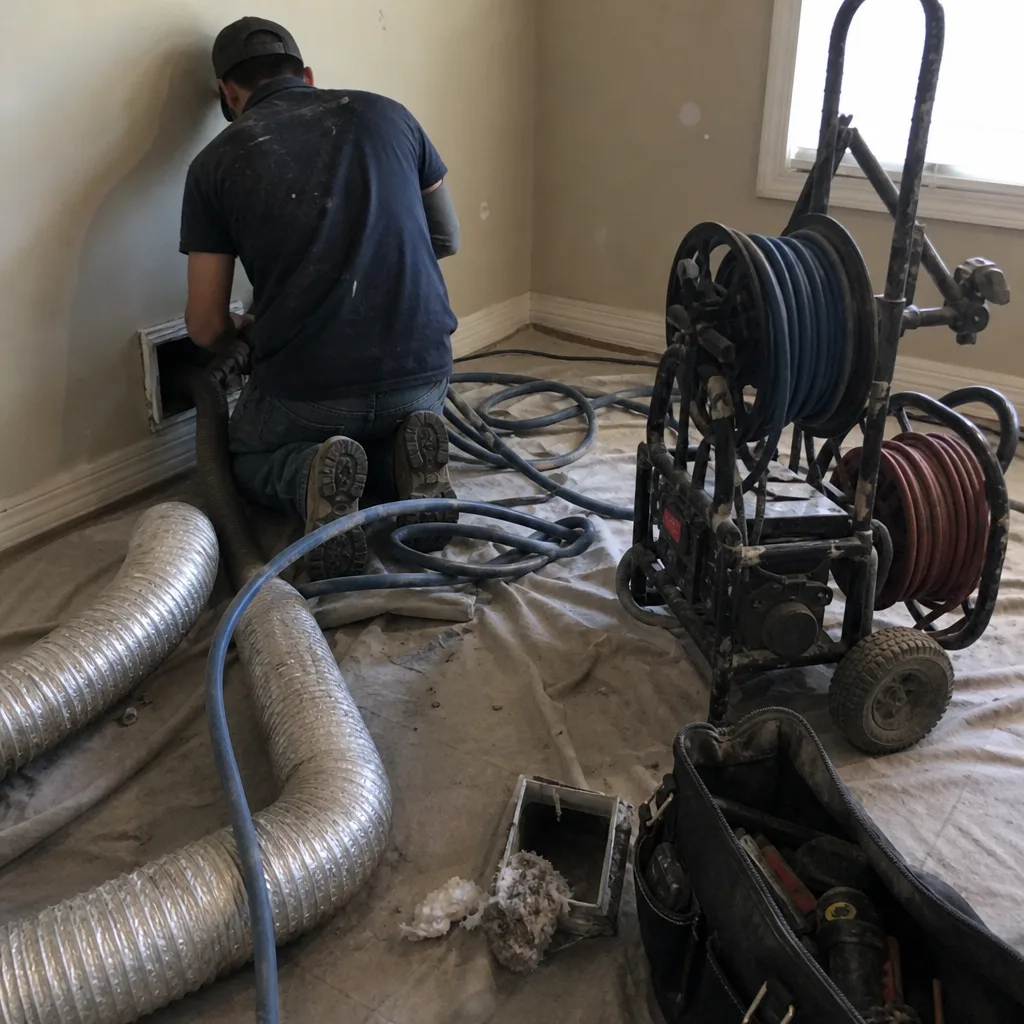 Before
 After
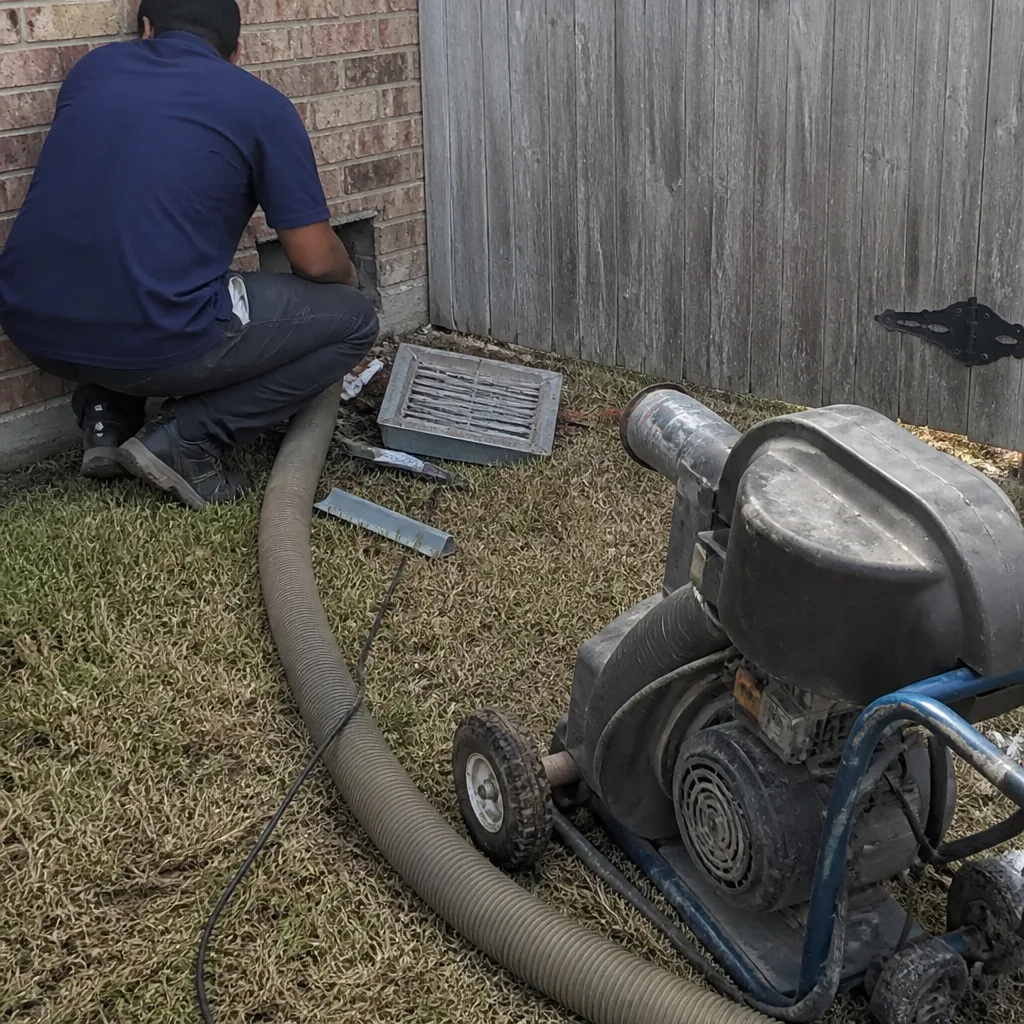 Before
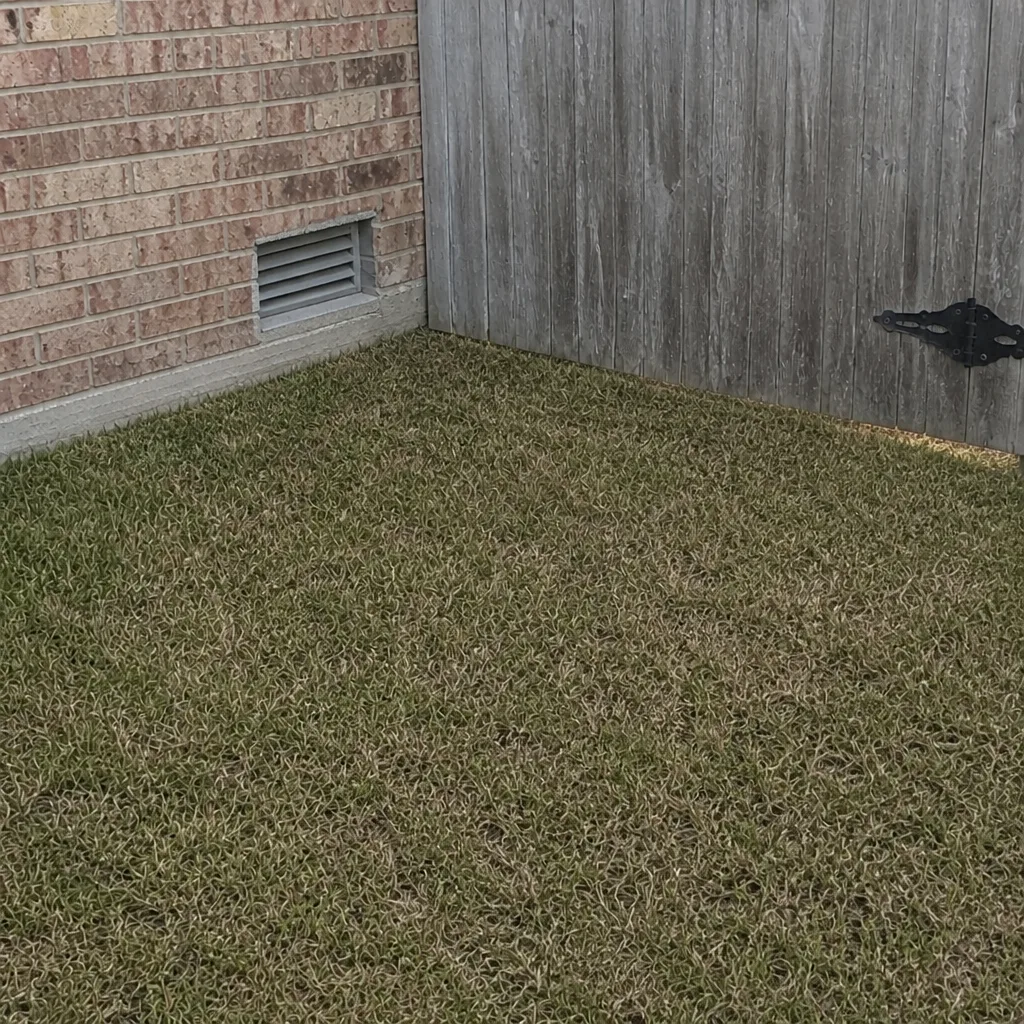 After
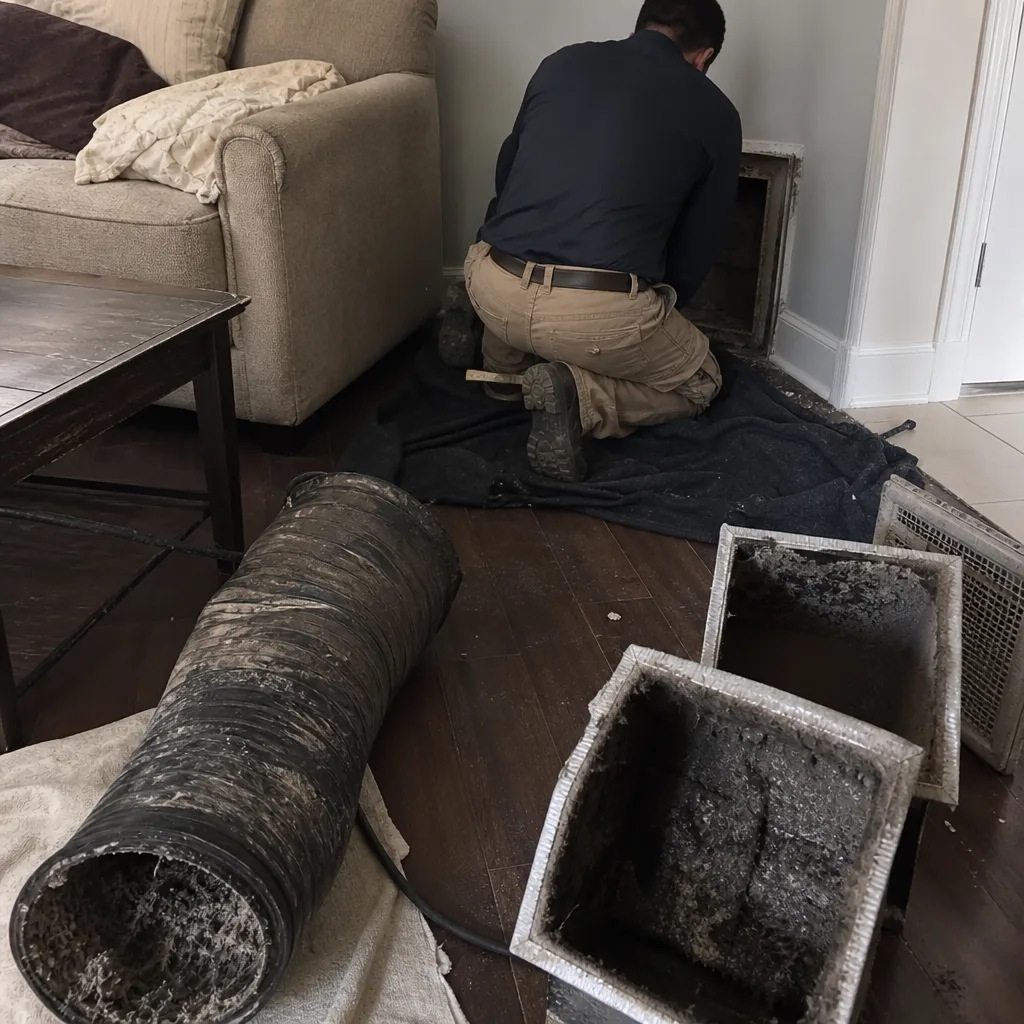 Before
 After
When to Call a Professional
Some signs are worth a phone call rather than a wait-and-see. Call a professional if you see a visible dust mat behind a return grille, if airflow at far registers has weakened noticeably, if a musty smell appears on AC startup and lingers, or if you’ve just moved into a home whose duct history you don’t know. Call if you’re near active construction in one of McKinney’s northern developments and your filter is loading up faster than it used to. Call if the first heat cycle produced a strong, persistent smell. And call if a bargain cleaning “found” damage and left you to sort it out yourself; we repair ductwork as a first-party service. Duct Cleaning McKinney offers free estimates in McKinney. Call (866) 361-7225. We answer 24/7. Fast dispatch from 7am to 7pm, Sunday through Friday.
Frequently Asked Questions
Most McKinney homes benefit from a full cleaning every few years, with inspections at the April and October transition points in between. The 150+ days of AC runtime here accumulates debris faster than in milder climates, so the schedule should be tied to your cooling and heating seasons rather than a generic national recommendation. Homes near active construction may need it more often. Call (866) 361-7225 for an exact quote; estimates are free.
Yes, April is the single best window before cooling season runs continuously. Cleaning before May means the system starts heavy AC season with clean ducts rather than pushing six months of accumulated debris through the house. The second-best window is October, before the first heat cycle.
The first heat cycle burns off dust that settled on the heat exchanger and duct surfaces during the cooling season. A brief smell is normal. A strong or persistent one suggests a heavier debris layer that’s worth addressing before heating season. A cleaning in October makes that first cycle milder.
We price per system, not per vent, and the written estimate sets the final price, agreed before work starts. That structure is deliberate: the per-vent coupon model is how bargain outfits make a low teaser price grow into a much larger invoice once they’re on site. Ask for a flat per-system price and before-and-after photos of your own ducts. Call (866) 361-7225 for an exact quote; estimates are free.
Cheap quotes usually reflect consumer-grade vacuums instead of professional equipment, no brush agitation to dislodge bonded debris, and no HEPA capture at the source. The work looks similar on the surface but leaves the debris layer in place. We use Rotobrush agitation and Nikro HEPA capture because those are what actually remove bonded debris and trap it during extraction.
Ask for before-and-after photos of your own ducts, and confirm the company uses professional-grade equipment and repairs ductwork in-house. A company that can show you its before-and-after documentation and stand behind the scope is a different proposition from one that leaves you guessing.
The Bottom Line
McKinney’s climate runs your duct system through two hard demand cycles a year, and the maintenance windows between them are short. April is the most important: get the ducts assessed and cleaned before cooling season runs continuously. October is the second: change the filter before the first heat cycle and address any summer accumulation. In between, check filters on a schedule that matches Collin County’s cedar and oak pollen seasons, and watch for construction dust if you’re near active building in the northern corridors. A professional cleaning every few years, backed by damage repair you can trust, keeps the system moving air the way it should.
If it’s time for an assessment, call Duct Cleaning McKinney at (866) 361-7225 for a free estimate. We answer 24/7. Fast dispatch from 7am to 7pm, Sunday through Friday, and we’re closed Saturday. One flat price per system, agreed before work starts, with before-and-after photos of your own ducts.
Written by the team at Duct Cleaning McKinney.