
Last updated November 15, 2026
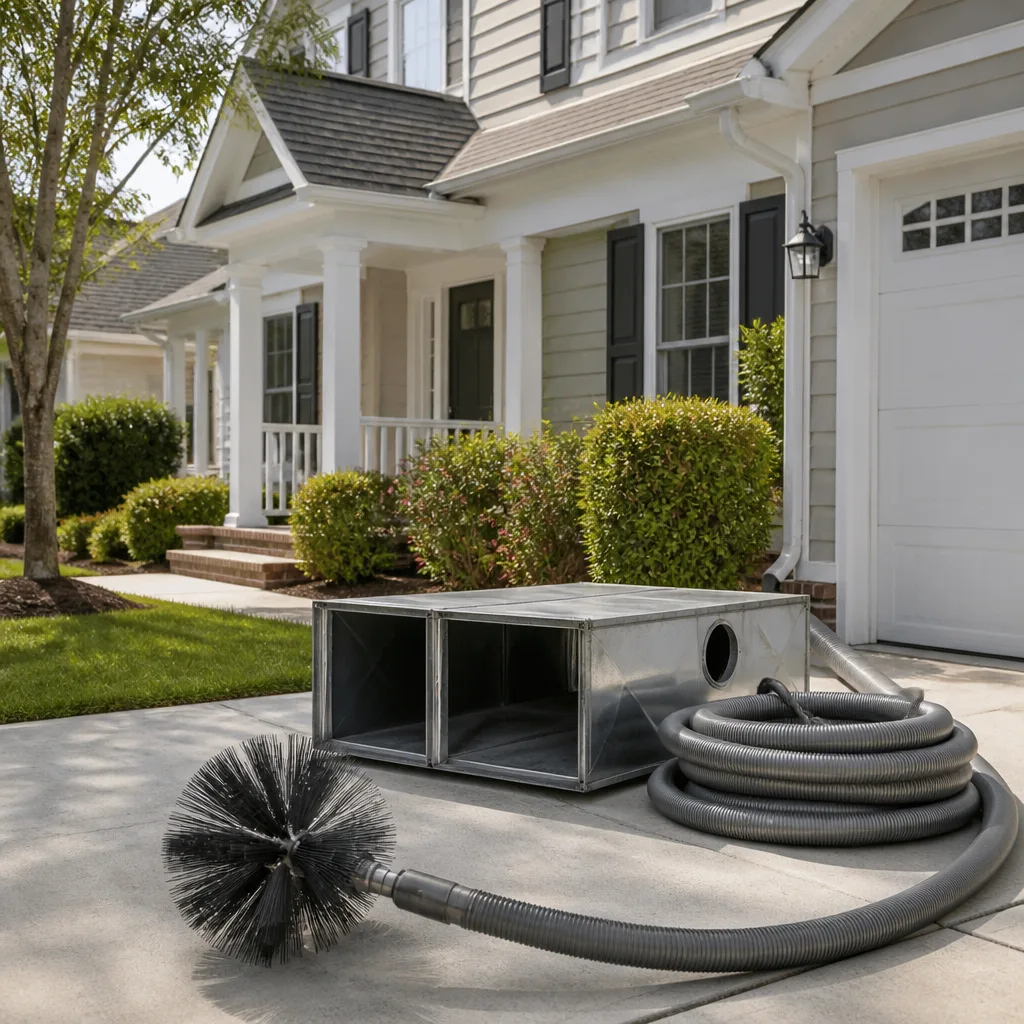 Whole-home duct cleaning
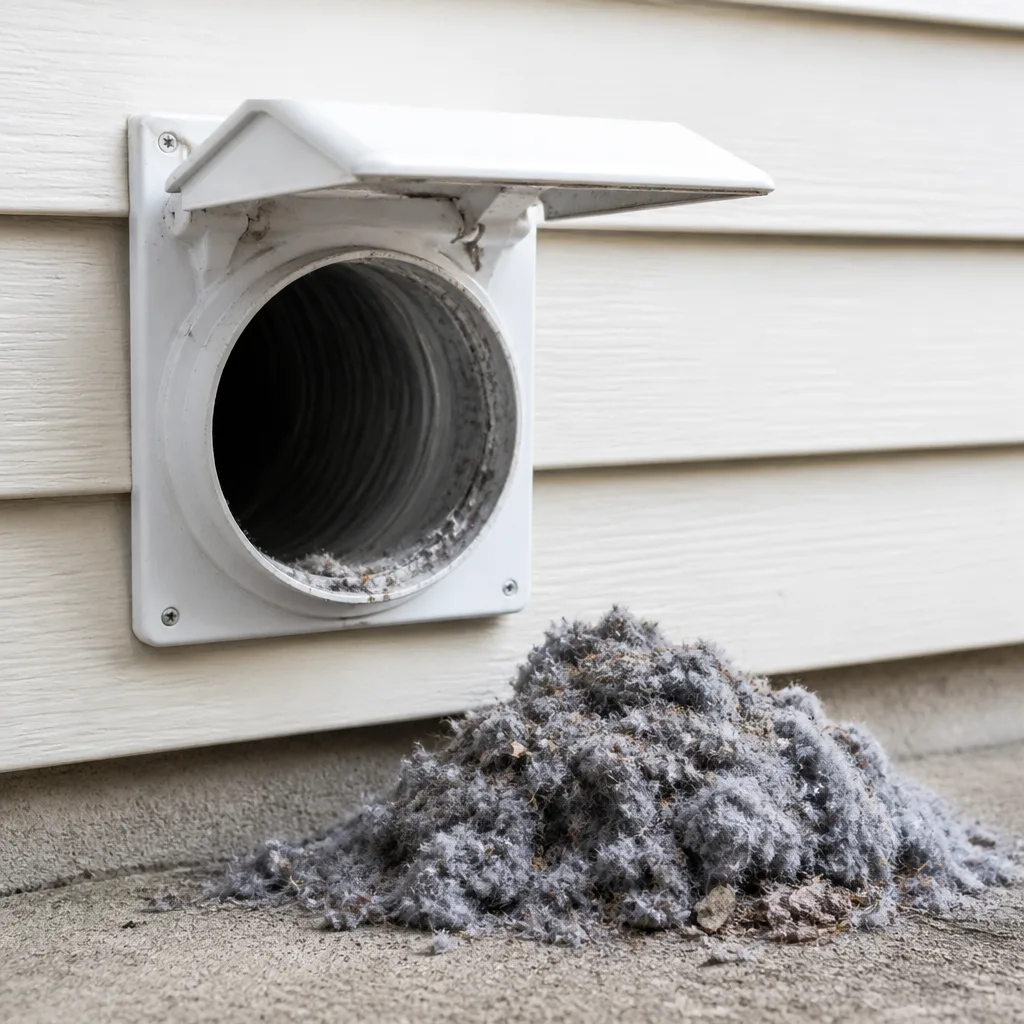 Dryer vent cleaning
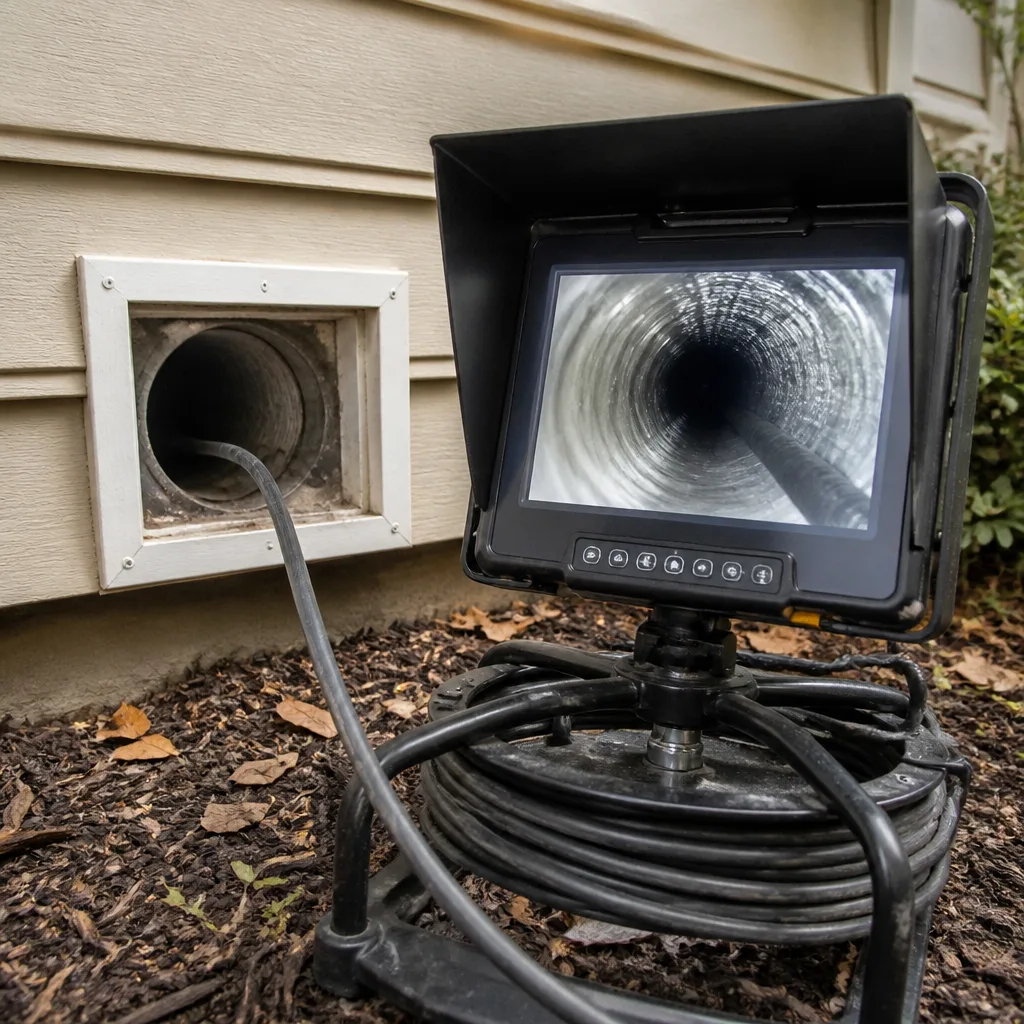 Camera inspection
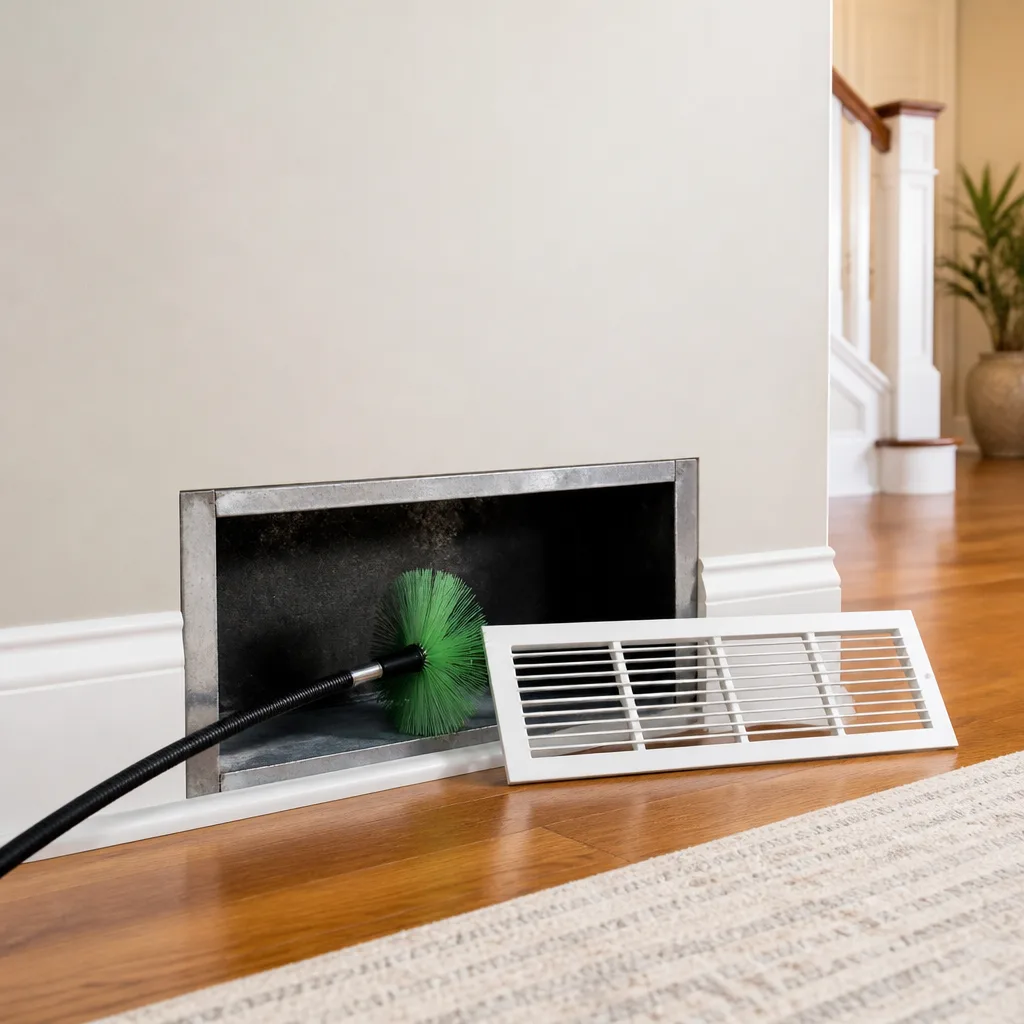 Sanitizing & deodorizing
Whole-system duct and dryer vent check with before-and-after photos - you see exactly what came out of your vents
That "$99 whole-house special" is a bait ad - the real number appears once they are in your hallway, or the "clean" is a shop-vac at the register. We photograph the inside of your ducts before and after instead.
Air Duct Cleaning Maintenance Checklist for McKinney Homeowners
Most homeowners treat duct cleaning as a one-time purchase, something you do once and forget. The industry’s own guidance from NADCA points to a cleaning interval of 3 to 5 years for a typical home. Here’s the part that gets skipped: “typical” assumes a stable house with settled surroundings. In McKinney, homes sitting inside active construction corridors along 380 or the feeder roads around 75 collect drywall dust, insulation fibers, and clay-soil particulate at a pace that can push a system past that threshold in under 18 months. This checklist gives you a maintenance rhythm tied to what actually happens in McKinney, not a national default.
Quick Answer
Air duct cleaning in McKinney should follow a condition-based schedule, not a fixed clock: check filters monthly, inspect grilles and returns every quarter, and book a professional evaluation after any renovation, a move-in, or when you see visible buildup at the returns. Homes in active construction zones around 380 and the 75 corridor often need professional cleaning closer to the 18-month mark than the standard 3-to-5-year interval.
Styles & brands we work with
- Whole-home duct cleaning
- Dryer vent cleaning
- Camera inspection
- Sanitizing & deodorizing
Table of Contents
- How Often Should You Clean Air Ducts in McKinney?
- Monthly Filter Checks Tied to McKinney’s Seasons
- What to Check at Supply and Return Grilles
- The Post-Renovation Window
- What Homeowners Can Do vs. What Needs a Technician
- How to Log Duct Condition Over Time
- When Cleaning Finds Damage
- Building a 12-Month Schedule
How Often Should You Clean Air Ducts in McKinney?
For a settled McKinney home with no recent construction and a well-maintained filter, the NADCA benchmark of 3 to 5 years is a reasonable starting point. That figure assumes a home that isn’t pulling in new particulate, though, and McKinney is a city where a lot of neighborhoods aren’t in that steady state. Homes inside new-build corridors along 380 and the 75 feeder roads are surrounded by active grading, framing, and landscaping for months at a time, and every AC cycle is drawing from that environment.
We’ve seen McKinney systems reach heavy buildup in under 18 months when a home sits near active construction. That’s not a scare tactic; it’s what happens when a filter loads up faster than the filter schedule accounts for. The fix is to shorten the inspection interval, not to clean on a fixed calendar.
Three factors compress the interval faster than normal in McKinney:
- Construction dust. Drywall dust is fine and travels deep into the return side. Homes near active builds should be inspected quarterly.
- Clay soil and wind-blown particulate. North Texas clay holds fine particulate and releases it during dry, windy stretches. Return grilles in homes near open ground load up faster than in fully landscaped neighborhoods.
- High AC runtime. McKinney summers keep the system running nearly continuously from May through September. Every hour the blower runs pulls air through the returns, so run the math on runtime against the filter schedule.
If you want a benchmark number instead of a heuristic: inspect every 12 months, measure buildup at the returns, and clean when the numbers or the visuals tell you to. That’s the honest answer, and it’s what air duct cleaning should be scheduled around.
Monthly Filter Checks Tied to McKinney’s Seasons
The filter is the first line of defense and the cheapest data point you have. Most manufacturers specify a change interval in hours, but a calendar check gives you a faster read on whether the home is collecting more than the interval assumes.
In McKinney, the seasons that matter for filter loading are spring pollen and the summer dust storms that roll through when dry, windy days lift clay particulate into the air. Winter is milder and filter loads drop. That means a filter that holds up fine in January may plug in three weeks in May.
Here’s the monthly routine we recommend to McKinney homeowners:
- Pull the filter on the first of each month. Hold it up to a light source. If light is visibly blocked across more than a third of the surface, replace it.
- Note the filter rating. Most duct systems in McKinney are rated for MERV 8 to MERV 11. Moving to a higher MERV is tempting but can overtax the blower on older systems. If you want to upgrade, have a technician check the pressure drop first.
- Write the date on the filter edge. A pen mark turns a guess into a record the next time you check.
- Inspect the filter housing. If the slot itself collects dust, the filter isn’t sealing properly. A gap around the edge lets unfiltered air bypass completely.
- Check again after any high-pollen week in April or May. Spring loading is real in McKinney and one extra mid-month check catches it.
If your filter plugs consistently in under 30 days, don’t just buy more filters. That’s a signal the duct system is holding debris that the filter can’t cycle out. For most homes, the next step is a professional evaluation rather than a passive filter swap.
What to Check at Supply and Return Grilles
You can learn a lot about duct interior condition from the grilles without pulling a single cover. This is the single most useful check a homeowner can do, and it’s where most problems first show visibly.
At a return grille, look at the wire mesh and the fins. A light, even gray film is normal. Dark patches, fuzzy edges, or visible accumulation on the grille itself signal that the return side is carrying more than a normal load. At supply grilles, look for streaks of fine dust on the diffuser fins and any visible particulate on the ceiling or wall right around the grille. A slight shadow ring is common; an actual puff-shaped dust plume around a supply means the plenum or the boot behind it is shedding.
Here’s what to look for at each type of grille:
- Returns: heavy film, fuzzy growth, or any musty smell when you stand near the return.
- Supplies: dust plumes on the ceiling, streaks on the fins, or a visible “dirty halo” around the frame.
- Floor registers: dark edges at the floor line where debris collects and settles.
- Any grille: a slight whistling or reduced airflow compared to the same grille a season ago.
If you see more than two of these signals in a McKinney home, the interior is almost certainly past the “light maintenance” stage. That’s when it’s worth calling for a full evaluation with a camera and a negative-air unit rather than a visual estimate.
The Post-Renovation Window
Renovations are the single biggest trigger in our maintenance checklist. When drywall gets cut, sanded, and installed, fine gypsum dust goes airborne and travels deep into the return system within hours. Flooring work does the same with sawdust and adhesive particulate. The window to clean is short: within 30 to 60 days of the last trade finishing, before that load has had a full AC season to work into the duct walls and coat the interior.
The specific events that make duct inspection non-negotiable in a McKinney home:
- Drywall installation or repair. Any gypsum work generates fine particulate that bypasses most filters at the particle size involved.
- Flooring replacement. Hardwood sanding, tile cutting, and carpet removal all produce particulate that finds the returns.
- Kitchen or bath remodels. Demolition dust is heavier and settles in the return boots first.
- Attic work. Insulation install or HVAC replacement in the attic can leave fiberglass and insulation dust in the system unless it’s sealed properly.
- New construction turn-over. In a new McKinney build, duct cleaning should happen after the builder’s final walk-through and before you move furniture in.
Waiting a full year after drywall work gives that particulate time to combine with normal household dust and settle more firmly. That’s why the 30-to-60-day window matters. After that point, cleaning becomes harder and the AC has been running with a compromised return.
If your home is near active construction in McKinney, this same logic applies even if you’re not the one doing the work. Dust from neighboring builds travels.
What Homeowners Can Do vs. What Needs a Technician
One of the most useful parts of a real maintenance checklist is knowing where the owner’s responsibility stops. Not everything is doable by a homeowner, and some things are actively dangerous to attempt.
What a homeowner can do:
- Replace the filter on a schedule and log the date.
- Vacuum the grilles and the returns with a brush attachment.
- Look for visible dust, streaks, or smells at each grille.
- Wipe down floor and ceiling register covers.
- Keep the return path clear of furniture and dust-catching storage.
- Record date, grille condition, and filter change in a log.
What requires a technician:
- Cleaning the interior duct runs, plenums, boots, and the blower compartment.
- Evaluating the interior with a camera.
- Any cleaning that involves negative-air containment.
- Any duct repair, re-sealing, or connection fix.
- Evaluating whether a higher-MERV filter is safe for the blower.
The reason the technician list isn’t just about effort is that consumer-grade vacuums recirculate the fine particulate back into the home. Professional crews use equipment designed to capture it, not move it. That’s what we mean by our Rotobrush brush-agitation system combined with Nikro HEPA filtration: the brush dislodges debris from the duct wall, the HEPA unit captures it. Consumer tools can’t sequence that two-step process because they’re not built for it.
How to Log Duct Condition Over Time
Documented history pays off twice: it tells you when the next cleaning is actually due, and it gives you an evidence trail when you sell the home. A McKinney buyer’s inspection will often flag visible duct condition, and a written record with photographs changes that conversation.
The simplest log format we suggest:
- Date. Every entry, even a filter change.
- Filter change date and rating. Note MERV rating and how loaded the filter was.
- Grille observations. A quick note per grille: clean, light film, visible buildup.
- Photo of each return. One shot per return, every three months. Same angle each time.
- Service records. Any professional cleaning, repair, or equipment installation, with a photo of the work area before and after.
- Anomalies. Any new smell, whistling sound, or uneven airflow.
A spreadsheet, a notebook, or a shared document works. The point isn’t the format; it’s the consistency. A McKinney homeowner who can hand a buyer a two-year photo log of the return grilles has a stronger negotiating position than one who says “we had it cleaned, I think, a while back.”
As a general rule, professional cleaning providers should be providing before-and-after photos of their own work. Adding those to your log makes it complete. If a provider won’t provide photos, that’s a reason to choose someone else.
When Cleaning Finds Damage
Cleaning regularly surfaces the things that only show up when someone is actually inside the system. Disconnected duct sections, crushed flex runs, torn insulation liner, and gaps at the register boot are common finds in McKinney homes, especially in attics where the run has been flexed, stepped on, or never properly strapped.
There are two ways a duct cleaning company handles this discovery. One is to write it up and hand you to a separate repair contractor, which adds a scheduling step and usually means the system is opened again before it’s fixed. The other is to repair it in the same engagement. We do the second. That’s why our service scope is air duct cleaning, dryer vent cleaning, and air duct repair: the repair capability isn’t an afterthought, it’s what closes the loop when cleaning turns up damage.
Common repairs that come up during cleaning:
- Disconnected trunk or run. Leaks conditioned air into the attic and pulls attic particulate into the system.
- Crushed flex duct. Restricted airflow at the point of the crush; blower workload goes up.
- Torn liner. Insulation fibers themselves become the contamination.
- Loose boot connections. Common behind register grilles in homes that have been remodeled.
- Contaminated plenum. The transition from the air handler needs cleaning, not just the runs.
If cleaning reveals one of these, you don’t want to schedule cleaning again until the repair is done. Otherwise the work you paid for is compromised on day one.
Building a 12-Month Schedule
Here’s a schedule that fits McKinney’s climate and construction cycles. Adjust the frequency if your home is in an active build corridor or has had recent renovation.
Monthly:
- Filter inspection and change if loaded.
- Log the date and filter condition.
Quarterly:
- Walk each return and supply grille; note condition and take a photo.
- Wipe down grille covers and register faces.
- Check for new smells, whistling, or visible dust plumes.
Annually:
- Full professional evaluation with camera and negative-air equipment.
- Clean the full duct system if buildup is confirmed.
- Have the dryer vent checked and cleaned as a safety item.
- Update the log with professional before-and-after photos.
Event-triggered:
- Post-renovation within 30 to 60 days.
- After a move-in or property acquisition.
- After any HVAC replacement.
- Whenever dust or smell increases noticeably.
Book the annual evaluation around late winter or early spring. Getting it done before McKinney’s heavy AC season gives you a clean system for the months that matter most, and catches any winter dust load before it settles.
Common Mistakes to Avoid
- Treating duct cleaning as a one-time purchase. The system collects new particulate every cycle. Schedule it as maintenance, not as a single event.
- Buying on price alone. The very-low-cost duct cleaning offers happen because the equipment is cheap and the process is short. Ask what equipment is being used before you book.
- Ignoring post-renovation cleaning. Drywall dust in the return is a documented issue. Waiting a year lets it settle into the duct walls.
- Assuming the filter change schedule is enough. A filter protects the air handler, not the ducts themselves. Debris that makes it into the duct stays there until it’s mechanically removed.
- Not asking for photos before and after. Any provider doing real work should be proud to show it. A McKinney homeowner who asks for before-and-after photos filters out the low-bid operators on the phone call.
- Skipping the dryer vent. It’s a separate duct run and a known residential fire cause. It deserves its own annual check, independent of the HVAC ducts.
- Hiring a provider who won’t touch repair. If the system has damage discovered during cleaning, you want the same crew closing the loop rather than starting over with a new contractor.
See the difference
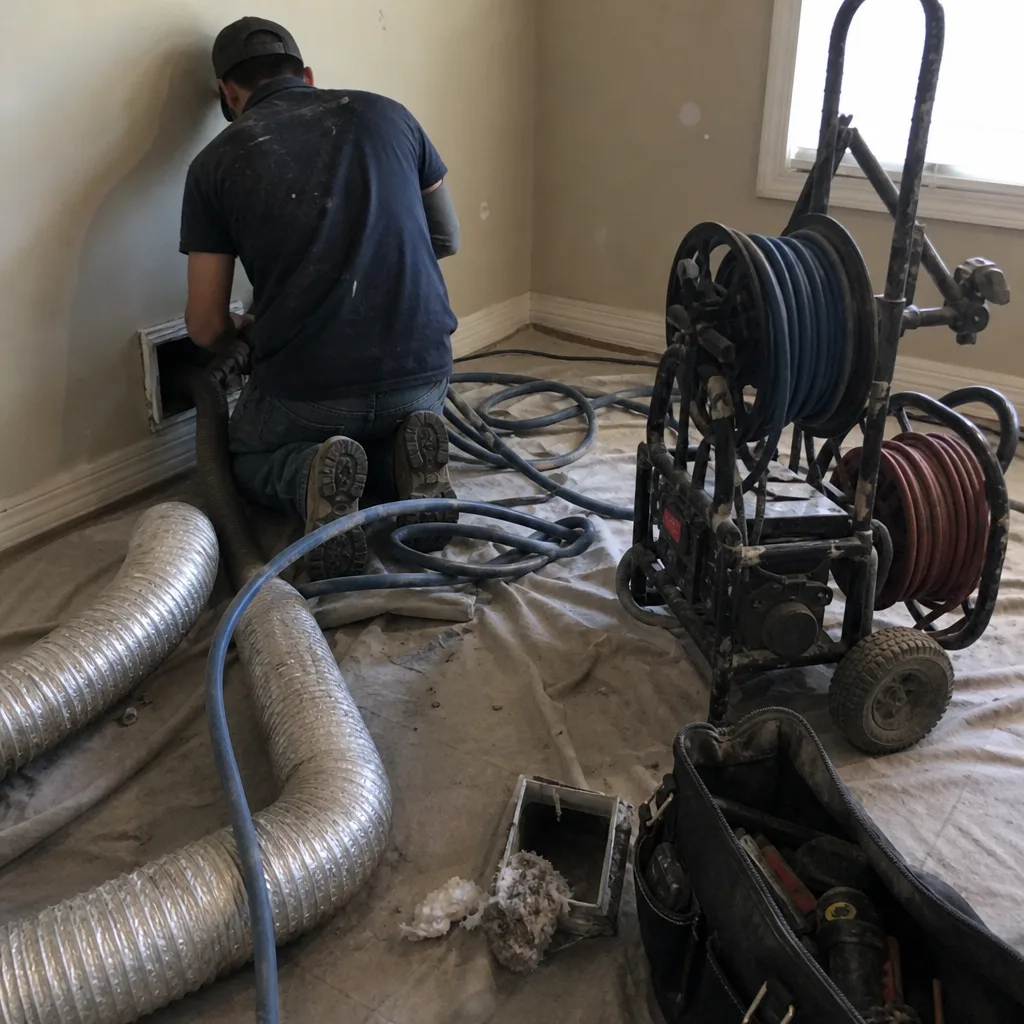 Before
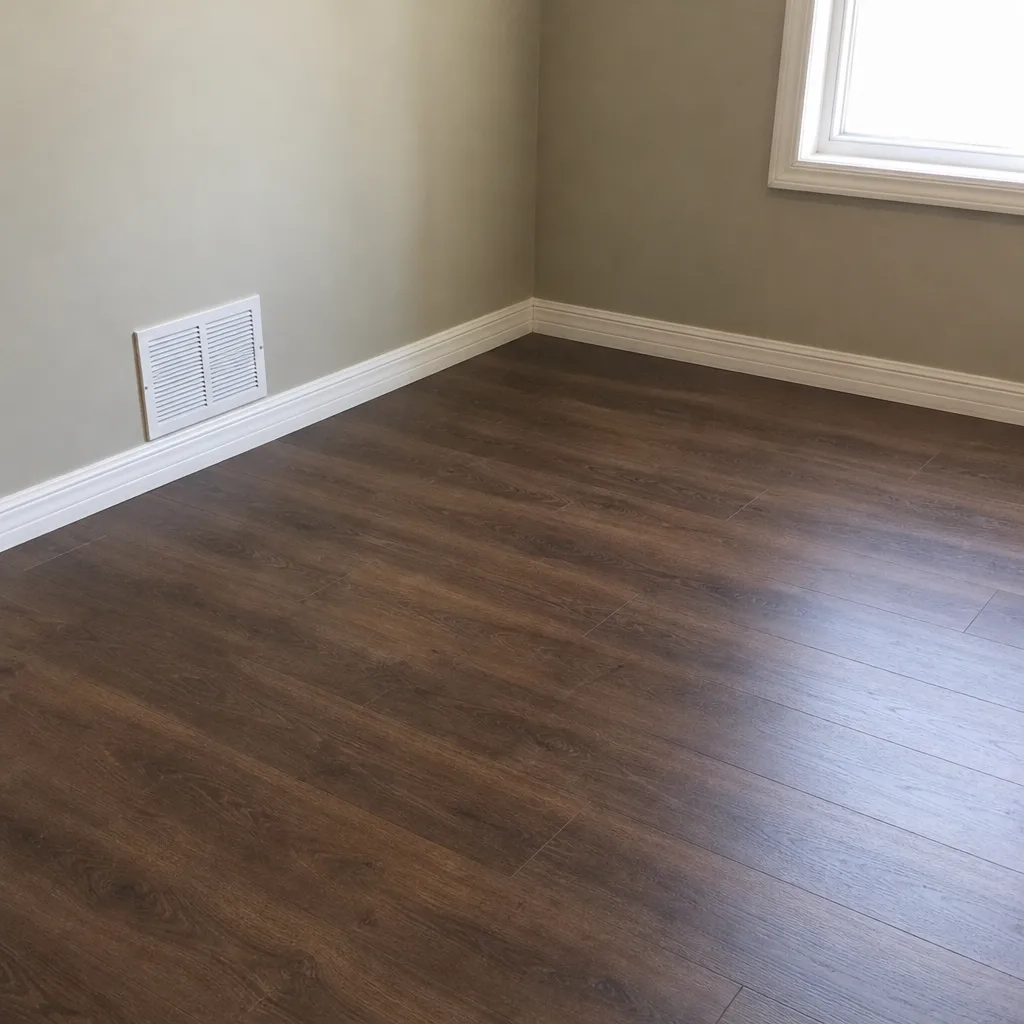 After
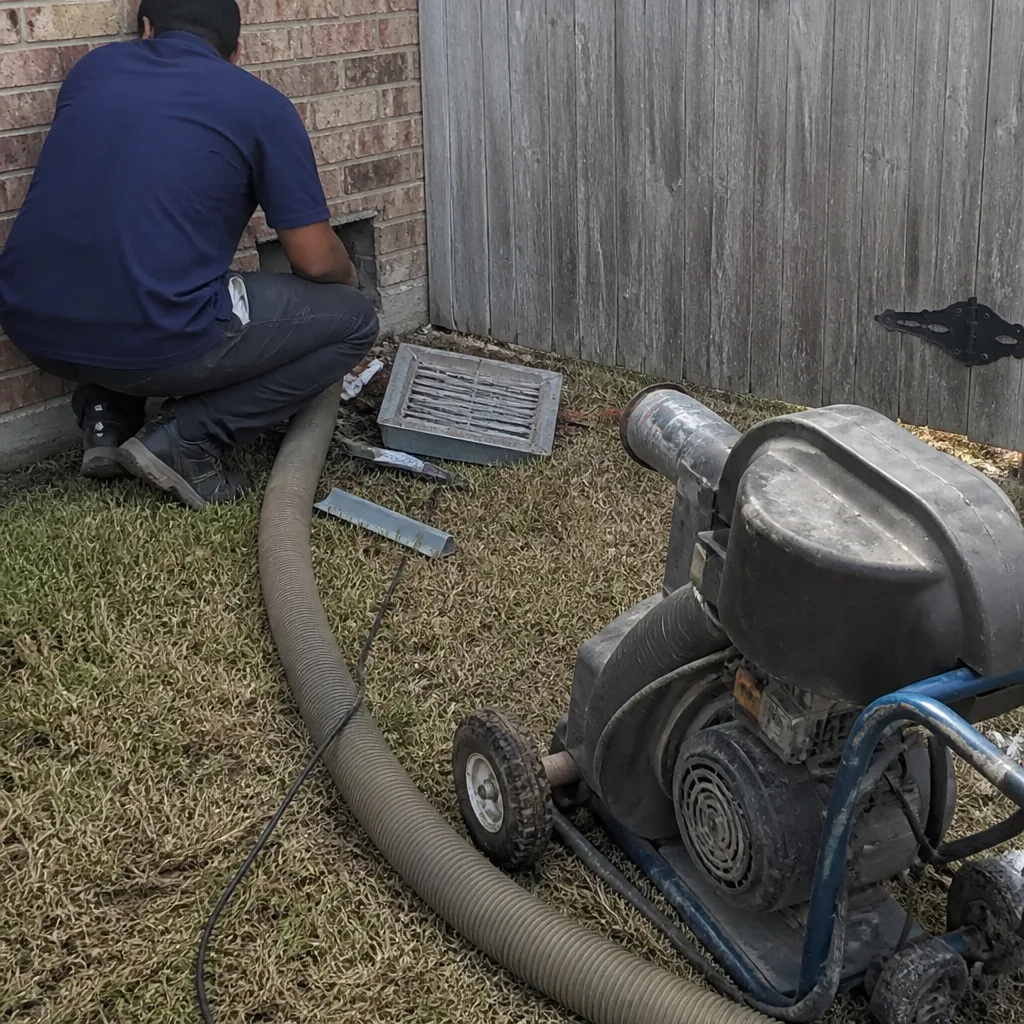 Before
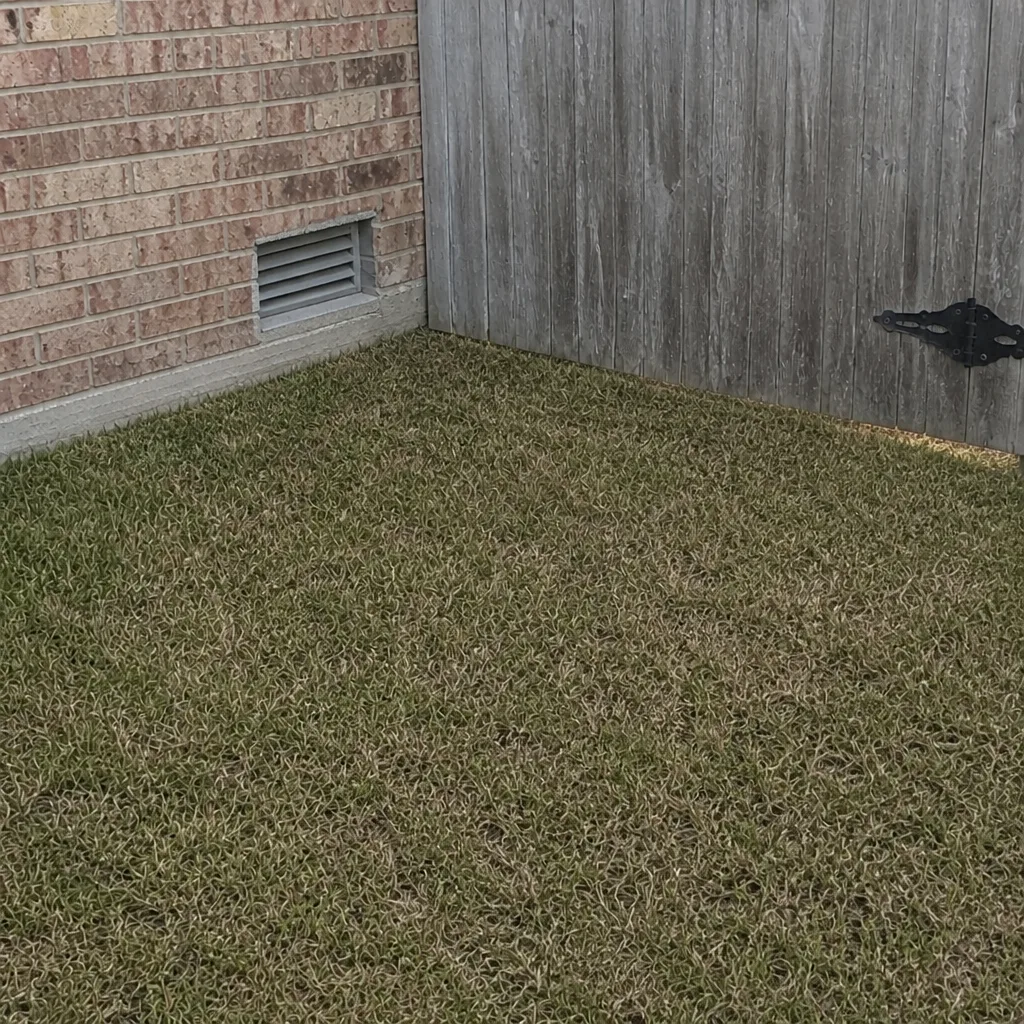 After
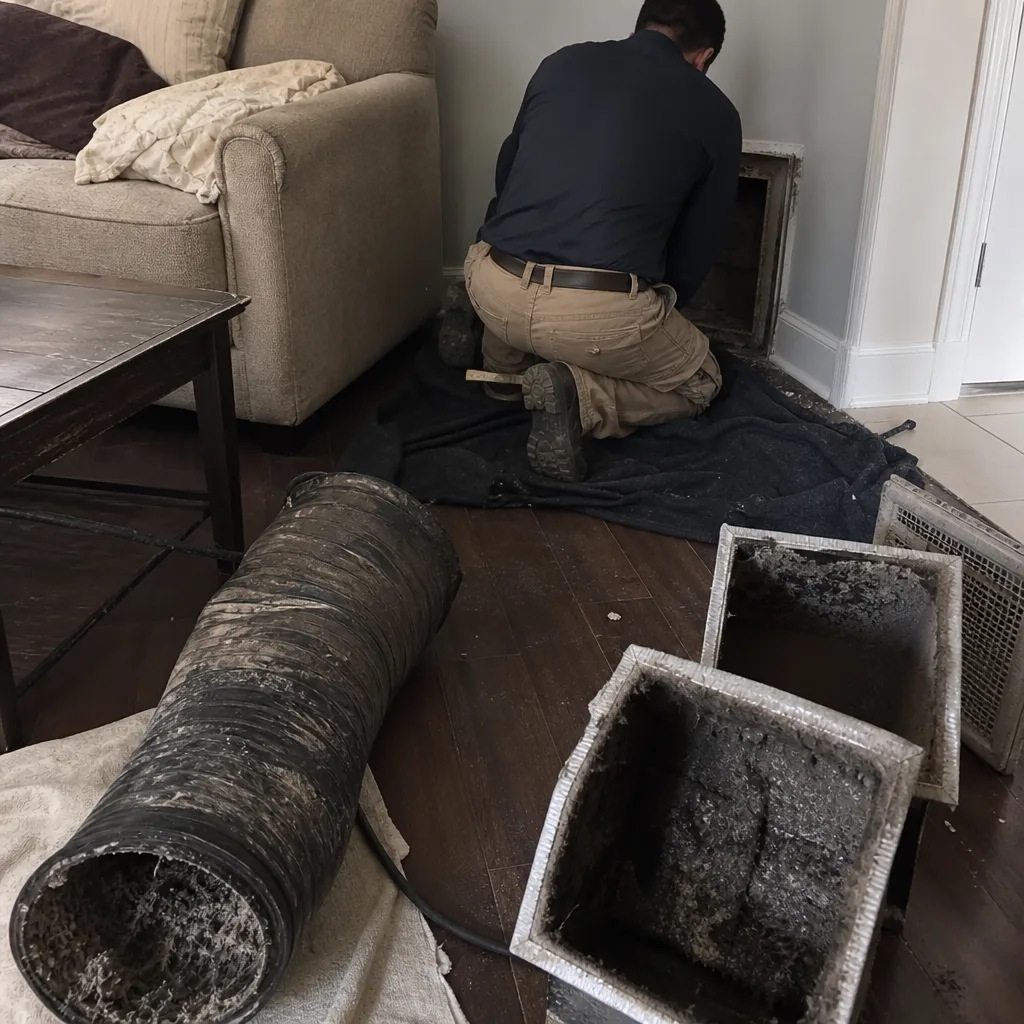 Before
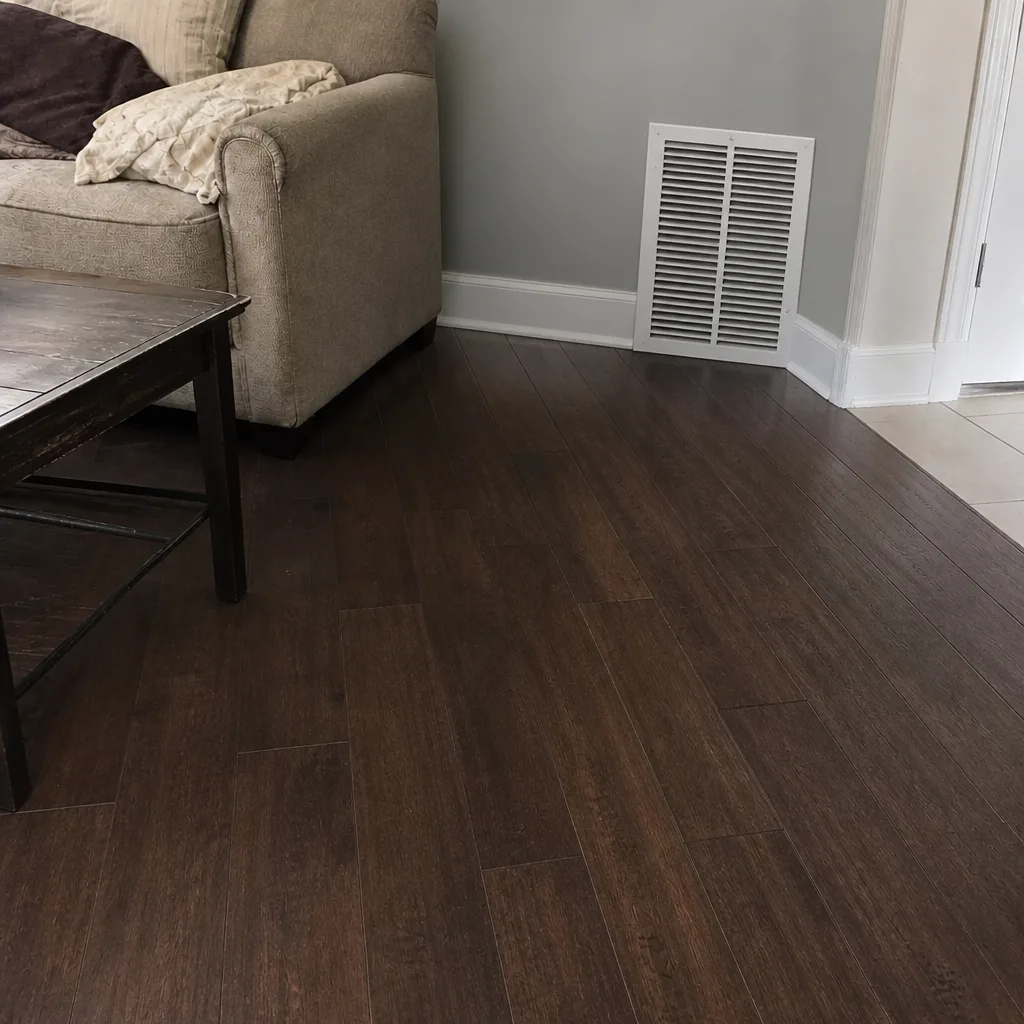 After
When to Call a Professional
Call for a professional evaluation when any of the following is true: you can see buildup on more than two grilles, there’s a persistent musty smell near a return, you’ve had drywall or flooring work inside the last 60 days, the home is in an active construction corridor in McKinney, you’ve just moved in, the filter plugs in under 30 days, or the airflow has visibly dropped at a register. In each of these cases, a camera inspection with a negative-air unit gives you a real answer instead of a guess. Our technicians have up to 13 years of experience and use restoration-grade equipment, not consumer vacuums. You can also book dryer vent cleaning as a standalone safety service at the same visit. Duct Cleaning McKinney offers free estimates in McKinney: call (866) 361-7225. We answer 24/7.
Frequently Asked Questions
Every 3 to 5 years for a settled home with no recent construction, and closer to every 12 to 18 months for homes in active construction corridors along 380 and the 75 feeder roads or homes that have had recent drywall or flooring work. The variable that moves the interval is what the home is pulling in, not the calendar. If you want a definite answer for your specific home, an inspection gives you one; call (866) 361-7225 for a free estimate.
Yes, for any renovation that involves drywall, flooring, or demolition. Fine gypsum dust and sawdust travel into the return system within hours and settle into the duct walls within a full AC season. The window to clean is 30 to 60 days after the last trade finishes.
A brush-agitation system for the duct walls plus a HEPA-rated negative-air unit for capture. At Duct Cleaning McKinney we use Rotobrush brush-agitation (contractor-grade, the standard in the industry) with Nikro HEPA filtration to trap what the brush dislodges, and Abatement Technologies negative-air equipment on jobs that need it. Consumer vacuums recirculate fine particulate; professional equipment captures it. If you’re unsure what a provider uses, ask.
Because the work is different. A low quote usually corresponds to a consumer-grade vacuum and a short pass over the supply registers. Real cleaning includes the returns, the plenum, the boots, and any compromised sections found along the way, and it uses equipment designed to capture the dislodged debris instead of recirculating it. The price we quote is one flat price per system, agreed before work starts, with before-and-after photos of your own ducts. Call (866) 361-7225 for a free estimate.
Ask for before-and-after photos of your own system, not stock images. Any provider doing real work has them and should offer them without being asked. If a McKinney homeowner doesn’t get photos, they can’t verify anything after the fact.
They’re separate duct systems with different risks. The HVAC ducts carry conditioned air; the dryer vent is a single run to the outside that handles lint and moisture and is a leading cause of residential fires. Both should be checked annually, and the dryer vent often needs more frequent cleaning in homes with heavy laundry cycles. We offer dryer cleaning-adjacent work on the vent run as a standalone service. Call (866) 361-7225 to discuss both.
Cleaning itself isn’t a health measure; the goal is removing accumulated debris that can affect airflow and air quality. Pairing cleaning with a filter upgrade (Honeywell and Aprilaire products are both compatible with most McKinney homes) gives you a more defensible air quality baseline over time. If you have specific health concerns, talk with your physician first; duct cleaning treats the system, not medical symptoms.
The Bottom Line
A useful duct maintenance checklist for McKinney is condition-based, not calendar-based. Check the filter monthly, walk the grilles quarterly, clean within 30 to 60 days of any renovation, and book professional cleaning whenever visible buildup or construction dust puts the system past its threshold. Keep a dated log with photos at each return; it protects you at resale and reminds you when the next cleaning is actually due. The right provider uses Rotobrush brush-agitation, Nikro HEPA capture, and Abatement Technologies negative-air equipment, and can repair the damage that inspection turns up. One call covers cleaning, repair, and dryer vent cleaning for the full system, the way restoration professionals do it.
If the schedule above is due for you, or if you’ve had renovation work in the last 60 days and haven’t had the system checked, call us. Duct Cleaning McKinney connects homeowners across McKinney with licensed and insured professionals using professional-grade equipment. The price is one flat price per system, agreed before work starts, and you get before-and-after photos of your own ducts. Call (866) 361-7225. We answer 24/7. Fast dispatch from 7am to 7pm, Sunday through Friday.
Written by the team at Duct Cleaning McKinney.